Influenza (The Flu)
A contagious respiratory virus — one of the most common causes of school absences in the U.S.
What Is the Flu?
How Does It Spread?
How Will You Feel?
Why Does It Matter at School?
How to Stay Safe!
What Is Influenza?
How Does It Spread?
Common Symptoms
Why It Matters in Schools
Prevention
Pathogen & Disease Overview
Transmission Dynamics
Clinical Presentation
Epidemiological Significance in Schools
Prevention & Public Health Measures
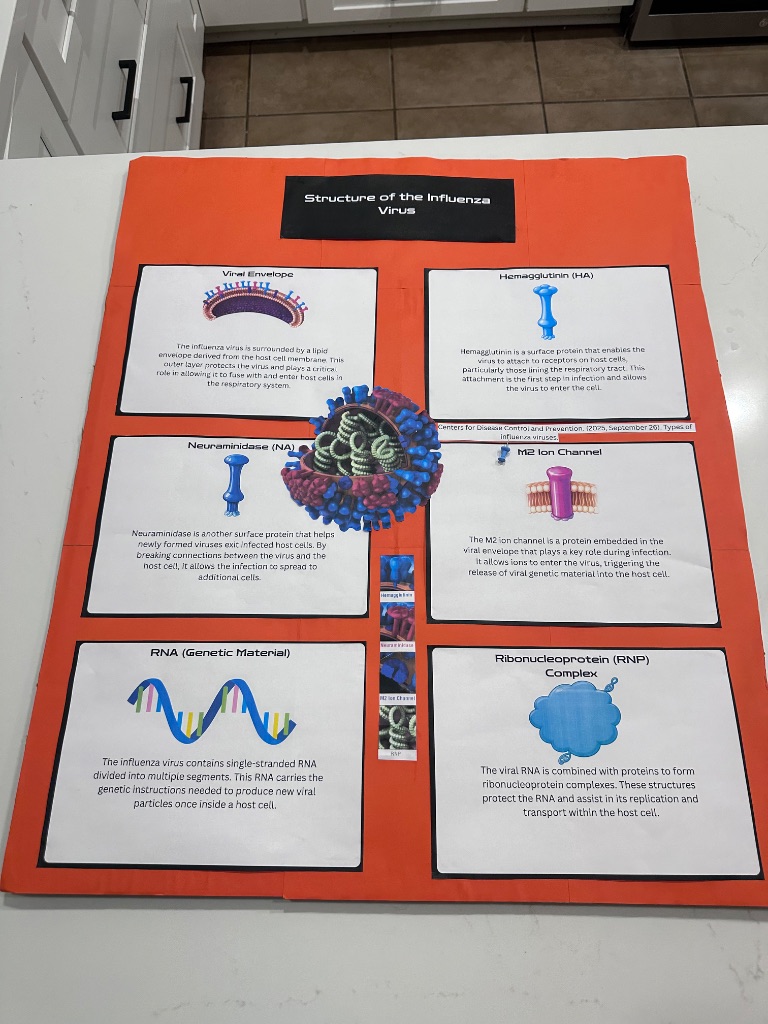
Influenza Virus Structure Model
A handmade physical model showing the viral envelope, hemagglutinin (HA), neuraminidase (NA), M2 ion channel, RNA segments, and RNP complex — built for this ISM project.
COVID-19
Caused by the SARS-CoV-2 coronavirus — a major disruptor of school operations globally since 2020.
What Is COVID-19?
How Does It Spread?
How Will You Feel?
Why Does It Matter at School?
How to Stay Safe!
What Is COVID-19?
How Does It Spread?
Common Symptoms
Why It Matters in Schools
Prevention
Pathogen & Disease Overview
Transmission Dynamics
Clinical Presentation
Epidemiological Significance in Schools
Prevention & Mitigation Strategies
RSV (Respiratory Syncytial Virus)
The leading cause of lower respiratory infection and infant hospitalization in the United States.
What Is RSV?
How Does It Spread?
How Will You Feel?
Why Does It Matter at School?
How to Stay Safe!
What Is RSV?
How Does It Spread?
Common Symptoms
Why It Matters in Schools
Prevention
Pathogen & Disease Overview
Transmission Dynamics
Clinical Presentation
Epidemiological Significance in Schools
Prevention & Immunization
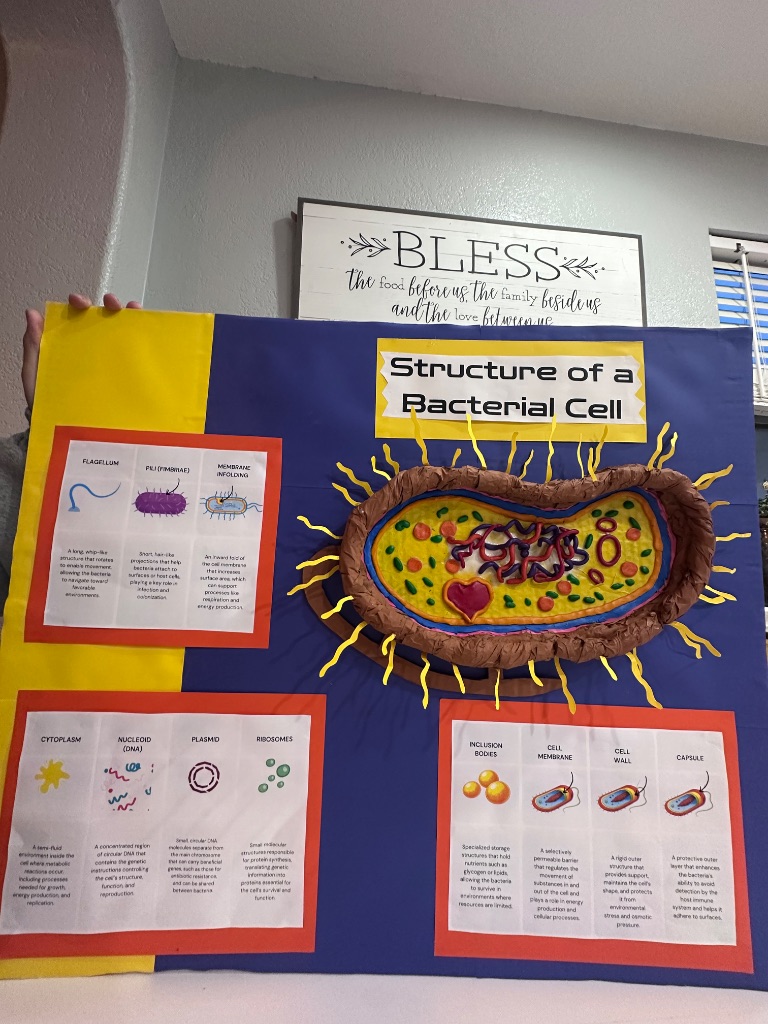
Bacterial Cell Structure Model
A handmade cross-section model showing flagellum, pili, capsule, cell wall, cytoplasm, nucleoid DNA, plasmid, and ribosomes — the very structures relevant to understanding bacterial diseases like Pertussis.
Pertussis (Whooping Cough)
A highly contagious bacterial infection known for intense coughing fits — preventable through vaccination.
What Is Whooping Cough?
How Does It Spread?
How Will You Feel?
Why Does It Matter at School?
How to Stay Safe!
What Is Pertussis?
How Does It Spread?
Three Stages of Illness
Why It Matters in Schools
Prevention
Pathogen & Disease Overview
Transmission Dynamics
Clinical Stages
Epidemiological Significance in Schools
Prevention & Treatment
Norovirus
The most common cause of vomiting and diarrhea in the U.S. — spreads rapidly in school and cafeteria settings.